
A new publication in IEEE Access (Q1), led by Ahmed Azough, Head of the Computer Science & Data Science MSc at ESILV, offers a structured review of artificial intelligence methods for detecting parking slots from in-vehicle cameras.
This work, to which Chaimae Aajal contributed, analyses how camera-based approaches have evolved into a scalable alternative to traditional sensor infrastructures, often limited by installation costs and weather exposure.
A transition toward scalable parking-slot detection
Urban density continues to increase and identifying an available parking space has become a significant operational challenge for cities and drivers. This publication explores the technologies developed recently to support autonomous parking systems and examines their potential for real-world deployment.
A Growing Need for Camera-Based Detection Systems
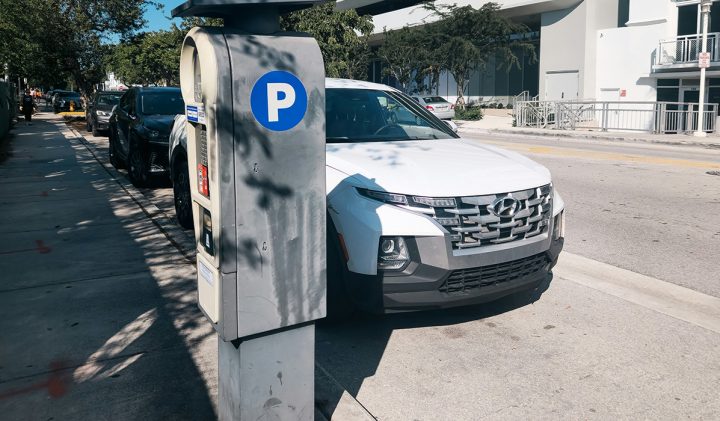
The study highlights the constraints faced by ground-embedded or infrastructure-mounted sensors.
These systems, while widely deployed, require heavy maintenance and remain sensitive to environmental degradation. In contrast, cameras mounted directly on vehicles offer a cost-effective, flexible and scalable option.
Artificial intelligence has considerably expanded the possibilities of computer vision. From early image-processing techniques to recent reinforcement learning models, the review outlines how each generation of methods has contributed to improved accuracy and adaptability in parking-slot recognition.
Comparative Analysis of Vision Approaches
- The publication examines three distinct imaging perspectives:
- Driver-view images, which reflect real driving conditions
- Bird’s-eye view projections, useful for spatial accuracy
- Around-View Monitoring (AVM) systems, increasingly common in modern vehicles
By evaluating the performance of these perspectives across widely used datasets, the authors provide a detailed overview of how models behave under different visual inputs and task complexities.
Challenges and Research Perspectives
The article discusses several constraints that research teams continue to address. These include:
- Real-time processing, essential for integration in embedded automotive systems
- Robustness in variable conditions, such as lighting changes, weather effects, or occlusions
- Dataset diversity, which directly influences generalisation capabilities
One trend emerges from the comparative analysis: hybrid models combining supervised learning and reinforcement learning demonstrate promising potential for next-generation autonomous parking systems.
This systematic review contributes to a clearer understanding of current AI-based parking-slot detection methods and identifies technical gaps between laboratory performance and operational integration.
It also highlights the relevance of camera-based strategies as the automotive sector moves toward greater autonomy.