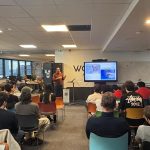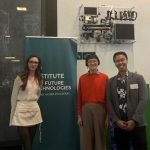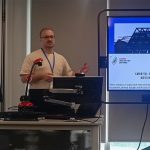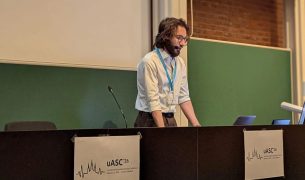

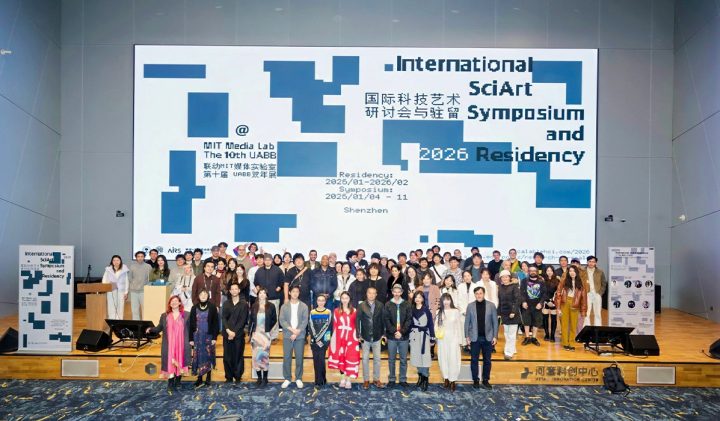
Xiao Xiao, Director of the Institute for Future Technologies at De Vinci Higher Education, presented Antithèse at the Scalable HCI Symposium in Shenzhen. This lecture-performance explored embodied cognition and technological augmentation through a live theremin dialogue with electroacoustic compositions.
As research in Human-Computer Interaction (HCI) increasingly bridges theory and practice, artistic experimentation offers a complementary perspective. At the Scalable HCI Symposium in Shenzhen, Xiao Xiao introduced a format that combines performance, reflection and technological inquiry.
A lecture-performance rooted in HCI research
Titled Antithèse: An Embodied Counterpoint to Technological Augmentation, the presentation took the form of a talk-performance for theremin in dialogue with electroacoustic compositions.
Through live music and critical commentary, the project examined how human skill, perception and resonance unfold across space and time.
The concept of Antithèse emerged during Xiao Xiao’s PhD more than a decade ago. Conceived as a way of using music to question assumptions embedded in HCI, the project draws on the philosophical notion of antithesis, with a reference to the Hegelian dialectic.
The title also plays on the idea of “anti-thesis,” reflecting the tension between artistic exploration and academic production.
Presented in the tradition of Leon Theremin’s lecture-performances, the work situates musical gesture as a research method. The theremin, played without physical contact, becomes an instrument for examining embodied interaction and the invisible dynamics between body, sound and technology.
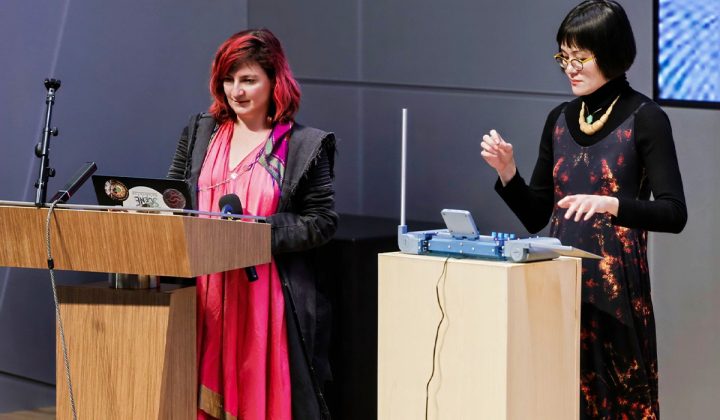
an improvised audiovisual moment with Sofy Yuditskaya (composition, poetry, visuals) at the end of the talk
Shenzhen: A global hub for scalable hardware innovation
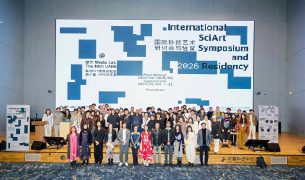
The Scalable HCI Research Symposium aims to cross-pollinate dialogues on hardware in HCI while highlighting Shenzhen’s position as a global innovation hub. Inspired by figures from the Open Hardware and Hackerspace movements, such as Bunnie Huang and Mitch Altman, the symposium promotes broader access to manufacturing ecosystems.
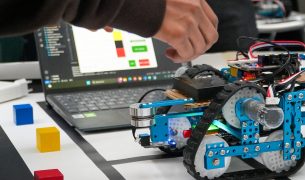
In collaboration with open hardware industry partners including Seeed, the event provides insight into manufacturing processes and supply chain dynamics. Following disruptions caused by the pandemic, China’s reopening has renewed attention on Shenzhen’s industrial landscape and its capacity to support research at scale.
In this context, Antithèse connected embodied artistic practice with discussions of hardware accessibility, prototyping, and research scalability. The performance contributed to an exchange where academia and industry intersect and theoretical questions meet technological infrastructure.
From piano performance to tangible interaction
Born in China and raised in the United States, Xiao Xiao is a technologist, interaction designer and artist, currently a PhD student in the Tangible Media Group at the MIT Media Lab. A lifelong pianist, she draws from the discipline of piano performance to inform the design of digital-physical interactions.
Her research has been presented at major conferences including TEI, CHI, SIGGRAPH, ITS and ACE, and featured in international media outlets such as CNN, PBS and NHK. She has also performed her project MirrorFugue at TEDxBoston, the Aspen Ideas Festival and BIF.
At the Institute for Future Technologies within De Vinci Higher Education, this interdisciplinary approach resonates with broader research themes in interaction design, embodied systems and emerging technologies. By positioning performance as a research tool, Antithèse contributes to ongoing reflections on how engineers and designers engage with technological augmentation.
Continuing the development of Antithèse
The Shenzhen presentation marked an initial public step for a project conceived years earlier. The combination of lecture and performance offers a format that integrates analytical discourse with sensory experience.
The development of Antithèse is set to continue, both as a conceptual framework and as a musical exploration. Through this work, questions of skill acquisition, embodiment and human resonance remain central to understanding how technology shapes — and is shaped by — lived experience.