
It begins quietly: a boardroom discussion about productivity. A prototype no one fully understands. A sudden cyber incident that halts operations. Somewhere between opportunity and urgency, a pattern emerges: companies are no longer just adopting technology; instead, they are competing for the people who can shape it.
Across industries, three skillsets have moved from “valuable” to “critical”: artificial intelligence, cybersecurity, and immersive technologies. Together, they are redefining not only how organisations operate but also who they hire and why.
The AI Architects: Building Intelligence into Everything
In today’s organisations, data is not only a by-product but its foundation. Nevertheless, raw data alone holds little value. What companies need are professionals capable of transforming it into insight, automation, and intelligent systems.
Artificial intelligence has shifted from experimental to operational. Businesses now rely on it to optimise supply chains, personalise services, and even anticipate risk. As a result, demand has surged for engineers who can design, deploy, and manage AI-driven systems.
At ESILV, this shift is embedded directly into the curriculum. The Master’s Degree in Engineering offers majors such as Software Engineering & AI and Data Engineering & AI, which train students to move beyond theory into building real-world systems. Students develop expertise in machine learning, data visualisation, cloud infrastructures, and responsible AI practices, preparing them to design and implement artificial intelligence solutions across industries.
What distinguishes these profiles is not just technical fluency, but systems thinking: the ability to connect data, infrastructure, and business impact. In a market where every company is becoming a tech company, this capability is no longer optional — it is foundational.
The Cyber Defenders: Securing a Permanently Connected World
If AI is the engine of transformation, cybersecurity is its safeguard. As digital ecosystems expand, so too does their vulnerability. From critical infrastructure to consumer applications, the cost of insecurity has never been higher. This has created a persistent talent gap: organisations are urgently seeking professionals who can anticipate threats, design secure architectures, and manage risk at scale. Cybersecurity is no longer confined to IT departments, but has become a strategic function.
ESILV’s programmes reflect this reality. Through majors such as Cybersecurity & Cloud Computing and Cybersecurity & IoT Trust, students learn to embed security into every layer of innovation: from secure coding and cloud systems to governance and risk management. The emphasis is clear: security must be automatically considered in all innovation processes.
Students are also immersed in hands-on environments—from Fab Labs to ethical hacking challenges—developing the reflexes required in real-world scenarios. The result is a new generation of engineers capable not only of defending systems, but of designing them securely from the outset. In a world where cyber threats evolve daily, these profiles are indispensable.
The Immersive Builders: Redefining Human Experience
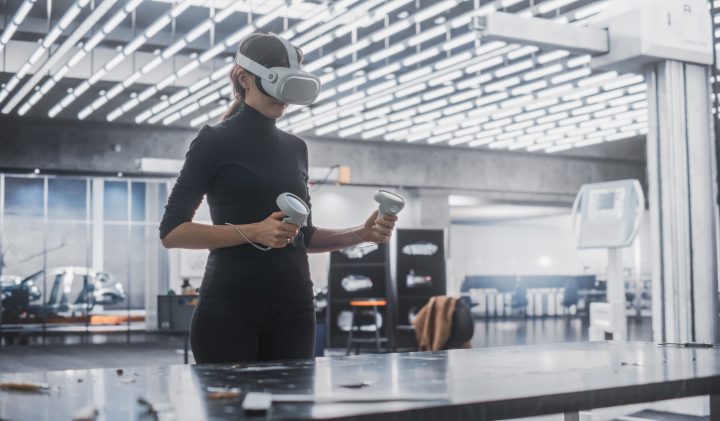
While AI and cybersecurity reshape the invisible infrastructure of organisations, immersive technologies are transforming what users see, feel, and experience. Extended reality (XR), virtual environments, and human–computer interaction are no longer confined to gaming or entertainment. They are redefining training, design, healthcare, retail, and collaboration. Companies are now searching for talent capable of blending technical engineering with human-centred design.
This is where immersive tech stands apart: it sits at the intersection of creativity, engineering, and behavioural insight. At De Vinci Higher Education, initiatives such as interdisciplinary programmes bring together expertise in AI, interaction design, and visual engineering.
These hybrid profiles are rare — and therefore highly sought after. They require not only technical mastery but also the ability to design meaningful interactions between humans and increasingly complex digital systems.
A Convergence, Not a Competition
What makes these three skillsets so powerful is not their independence, but their convergence. AI systems require secure infrastructures. Cybersecurity increasingly relies on AI to detect threats. Immersive environments depend on both to function safely and intelligently. Together, they form the backbone of the modern digital economy.
Employers are no longer hiring for isolated expertise. They are looking for engineers who can operate across these domains and who understand how intelligence, security, and experience intersect.
This is precisely the philosophy underpinning ESILV’s programmes. With a project-based pedagogy, interdisciplinary learning, and strong industry connections, the school prepares students to navigate and shape this convergence. Through specialised MSc programmes and a Master’s Degree in Engineering, students develop both deep expertise and cross-functional agility.
The competition is no longer about technology adoption. It now focuses on talent. Organisations that fail to attract and develop these skillsets risk falling behind. Meanwhile, those that succeed are building not just capabilities, but strategic advantage. For students and professionals, the message is equally clear: mastering one of these domains is powerful. Understanding how they connect is transformative.