
How to make a resume that both reflects personal goals and is attractive to recruiters? Engineering schools allow students to come up with a precise career objective throughout the years. Here are a few tips for creating a strong resume.
Studying in an engineering school gives students time to ponder over their career objectives, their favorite classes, internships and projects, etc. For students at ESILV, the structured journey through its programmes makes it possible to build a CV that tells a coherent, compelling story, not merely a list of qualifications, but a logical narrative that recruiters can follow at a glance.
Building Competences From the Ground Up
The academic portion of ESILV’s International Programmes holds the essential groundwork for students to discover their true interests and motivations. Students are exposed to a broad range of scientific and technical disciplines, completing both individual and collaborative practical projects that help them discover where their strengths and interests lie. By engaging with engineers from various sectors early on through events, visits, and networking opportunities within the De Vinci Higher Education ecosystem, ESILV students begin to form a clearer picture of the industries and roles they wish to pursue. This exploratory phase, far from being unfocused, becomes the foundation on which a targeted CV is later built.
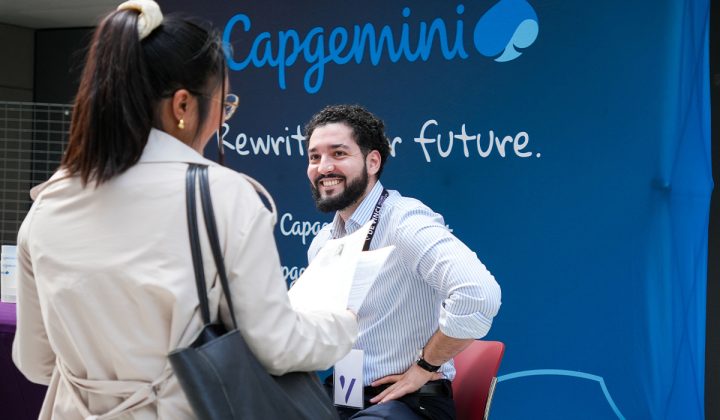
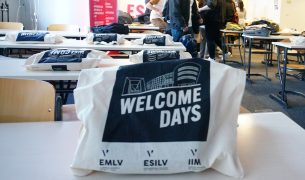
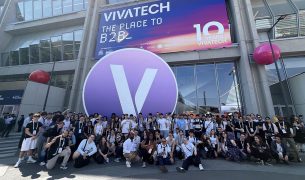
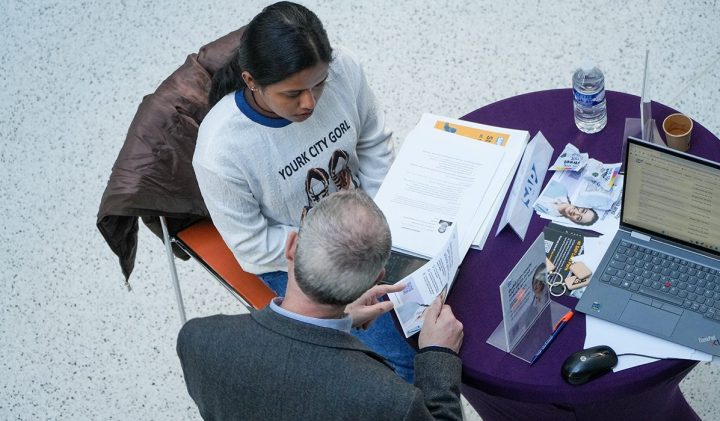
ESILV holds several events each year for students to meet corporate recruiters in diverse industries
Defining a genuine career objective requires honest self-assessment. Before committing to a specialism or drafting a CV, students benefit from asking themselves a series of fundamental questions: What are my strengths? What kind of work environment suits me: a multinational corporation, an SME, or a start-up? Am I drawn to entrepreneurship? What values guide my professional choices, and which sectors align with them?
These questions are not merely philosophical. Recruiters look closely at a candidate’s educational path to assess whether their choices, such as their chosen specialisation, reflect genuine direction and purpose. A CV built without this clarity tends to feel generic; one built with it stands out.
When reading a candidate’s CV, a good recruiter asks one question: is there a clear logic connecting this person’s studies, experiences, and career objective? The guiding thread must be immediately visible.
Making the Most of Every Opportunity
Beyond coursework, the choices students make during their time at engineering school carry significant weight on a CV. International internship opportunities, for instance, should be selected with professional intent in mind: a position for an MSc Aeronautical & Aerospatial Engineering student at a leading aerospace company located in a country with reknown excellence on the topic carries considerably more impact than a general placement chosen for lifestyle reasons.
Work placements throughout the curriculum are equally important. Each internship, whether in a target company, a preferred sector, or a role the student aspires to, provides concrete experience that brings a CV to life.
For Master in Engineering-Grande Ecole Programme students, the final-year internship is particularly significant: spanning five to six months, it represents the most substantial professional experience before graduation and often serves as a springboard to a first permanent position.
Letting Personality Speak
French CVs frequently include a section on extracurricular activities, and for good reason. Student associations, competitive sport, creative pursuits, and volunteer commitments offer recruiters a fuller picture of the candidate as an individual.
Rather than downplaying these experiences, students are encouraged to present them with the same rigour applied to academic achievements — noting leadership roles, competitions entered, prizes won, and the concrete skills developed along the way.
Soft skills such as project management, budget oversight, event coordination, and team leadership are increasingly valued by employers, especially when choosing between candidates with comparable technical profiles. These transferable competences, when clearly articulated, can make the difference.

With over 65 associations to choose from, ESILV international students have the opportunity to have a full immersion in French student life and culture while acquiring relevant soft skills
The Underlying Logic: The Key to a Strong CV
Ultimately, the strength of a CV lies not in the volume of experiences it lists, but in the clarity of the narrative it conveys. Every section, from education to internships, associations, and personal projects, should contribute to a single, coherent answer to the recruiter’s central question: why this candidate, for this role, at this stage?
Students who take the time to identify and communicate that underlying logic are the ones whose CVs leave a lasting impression.
ESILV’s Role in Building a Strong Professional Presence
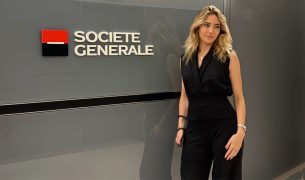
At ESILV, career readiness is woven into the fabric of the programme from day one. The school’s educational project is built in close partnership with industry, ensuring that students gain at least 14 months of in-company experience over their five years of study. This sustained exposure to professional environments — spanning sectors as diverse as aeronautics, finance, IT, civil engineering, and telecoms — means that graduates enter the job market not as promising candidates, but as operational engineers.
Beyond career fairs and networking events, ESILV connects students with real company projects throughout their studies, grounding theoretical knowledge in practical application.
After graduation, the Devinci Alumni Network keeps that professional momentum alive: a committed community of engineers already in their careers who return to campus, mentor current students, and open doors across industries.
The result speaks for itself: ESILV’s annual first job survey consistently reflects the strong and swift integration of its graduates into the workforce. For students who take full advantage of what the school offers, the CV they bring to their first interview is rarely their first professional statement.