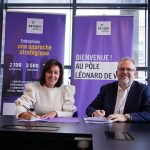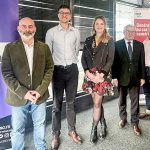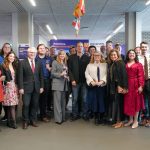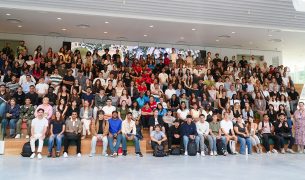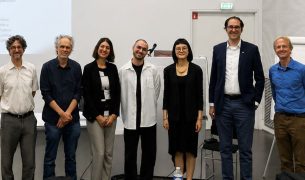

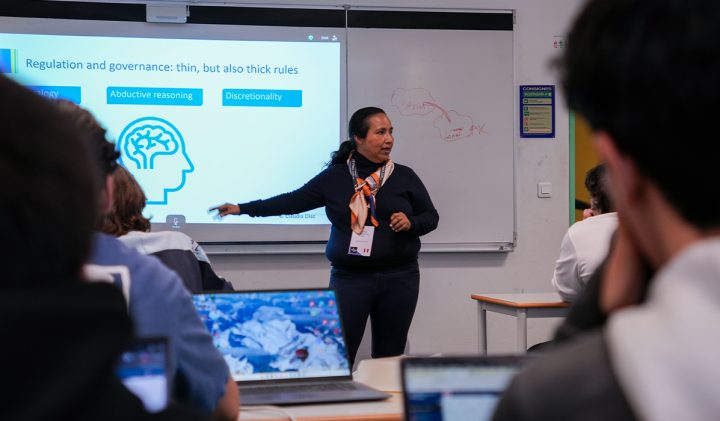
De Vinci Higher Education hosted its annual International Week across its campuses in Paris, La Défense, and Nantes. This event brought together students from ESILV (engineering), EMLV (business), and IIM (digital), along with visiting professors from partner universities worldwide.
The International Week is designed as an immersive academic experience, allowing students to engage with diverse teaching styles and international perspectives. Courses are delivered in English, both in-person and online, helping students prepare for studying abroad while strengthening their adaptability and intercultural skills.
A Transversal and Interdisciplinary Approach
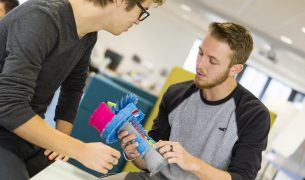
A key feature of the event is its transversal pedagogy. Students from different disciplines collaborate in multidisciplinary teams, combining engineering, management, and digital expertise.
This approach reflects the educational strategy of De Vinci Higher Education, which aims to prepare students for global and interconnected professional environments.
Throughout the week, participants attend lectures, workshops, and conferences covering a wide range of topics, including artificial intelligence, sustainability, finance, telecommunications, and digital innovation. Beyond academic learning, the program also includes activities such as an international challenge and experience-sharing sessions about studying abroad.
An International Academic Environment
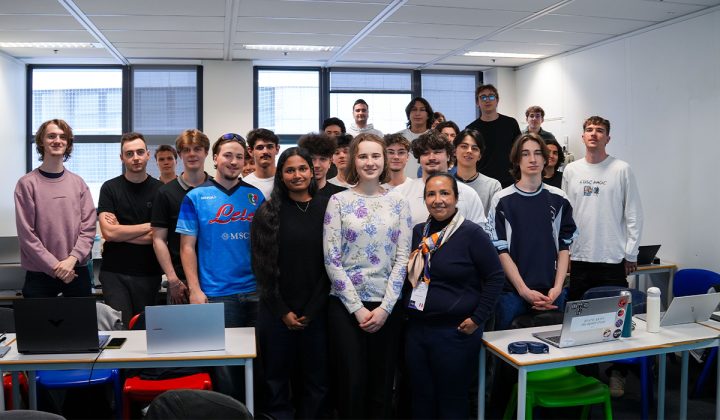
The International Week gathers around 1,500 students and numerous visiting professors from partner universities worldwide.
This diversity creates a dynamic academic environment where students are exposed to new methodologies, cultural perspectives, and global challenges.
The objective is not only to broaden academic knowledge but also to develop key soft skills such as adaptability, collaboration, and critical thinking, which are essential for future engineers working in international contexts.
ESILV – Visiting Professors, Subjects and Universities
Below is a selection of professors teaching ESILV students, based on the program:
- Somdutta Banerjee – AI as a Catalyst for Social Sustainability in STEM Entrepreneurship
Woxsen University (India) - Tom Butler – Corporate Sustainable Data Analytics and Reporting in the EU
University College Cork (Ireland) - Tianhua Chen – Intelligent Network Management in 5G/B5G Telecommunications Networks
Riga Technical University (Latvia) - Tri Dang – Developing a Sustainability Tower Defense Game with Python
RMIT University (Vietnam) - Thomas Krabichler – Deep ALM – A Journey from Simplicity to Depth
OST – Eastern Switzerland University of Applied Sciences (Switzerland) - Marc Kramer – How to Use AI to Create Jobs and Opportunity
VinUniversity (Vietnam) - Phillip Kronthaler – Vibration Reduction by Means of Trajectory Planning
MCI – The Entrepreneurial School (Austria) - Christian Locher – How Digital FinTechs Democratize Wealth and Drive Financial Inclusion
THI Business School (Germany) - Jerry O’Connell – Corporate Governance and Ethics & Global Markets
Dorset College Dublin (Ireland) - Thomas Petzold – Entrepreneurship in Networked Ecosystems
Media University of Applied Sciences (Germany) - Kalle Raijonkari – Sustainable Development and UX Design
Jamk University of Applied Sciences (Finland) - Otto Regalado-Pezua – Responsible Destination Management
Universidad ESAN (Peru) - Mônica Rocha de Carvalho – Governance, Climate Risk and Sustainability
Fundação Dom Cabral (Brazil) - Nada Sbihi – Data Mining
University International of Rabat (Morocco) - Alysha Shivji – Corporate Sustainability & Greenwashing
Tec de Monterrey (Mexico) - Andrew Simoncelli – Visual Communication in an Age of Artificial Intelligence
Nicholls State University (USA) - Nimisha Singh – Developing Responsible AI
Bennett University (India) - Iulia-Cristina Stanica – AI in Healthcare Applications
Politehnica University of Bucharest (Romania)