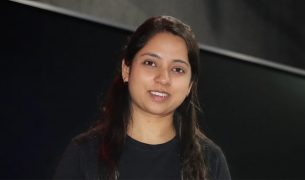

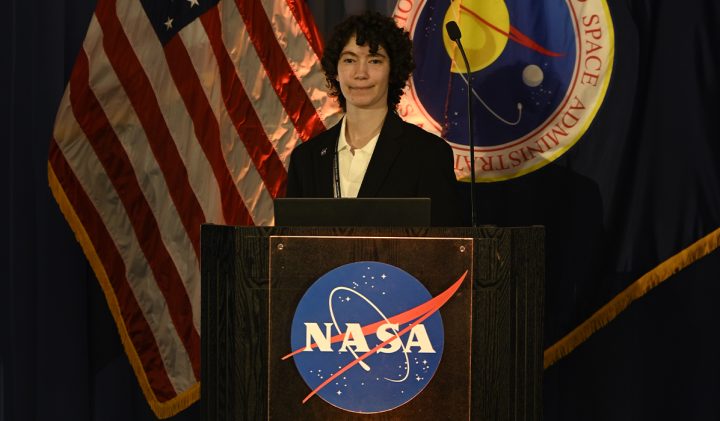
Eden Elfassy, ESILV class of 2028 and currently in her fourth year in the Aerospace major, presented a research poster at SpaceCHI 2026, held on 24-25 September at NASA Ames Research Center in California. Her work examines how an astronaut inside an orbital habitat could use a physical interface to adjust the tasks of robots inspecting its exterior.
In the scenario, the robots move and coordinate autonomously. The astronaut’s role is to understand how inspection tasks are distributed and intervene when that distribution needs to change. Eden studied this question with two co-authors: Thomas Juldo and Mariana Tamashiro.
An interface for adjusting inspection tasks
The poster, “Design Considerations for Tangible Human-Swarm Interaction in Orbital Habitat Inspection,” explores how a person could interact with a swarm of inspection robots through a tangible interface.
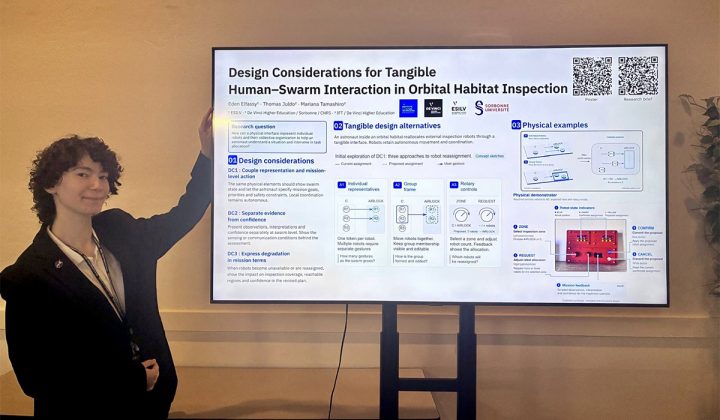
The poster, “Design Considerations for Tangible Human–Swarm Interaction in Orbital Habitat Inspection,”
In the scenario studied, the astronaut remains inside the orbital habitat while the robots inspect its exterior. The interface would allow the astronaut to allocate tasks among the robots. Their movements and coordination would remain autonomous. This distinction guided the research: the team examined how to give the astronaut a useful way to intervene without requiring them to direct each robot’s actions.
Eden and her co-authors explored several approaches to the physical interface and developed an initial prototype. The prototype let them test their design ideas and present the proposed interaction to other researchers. The work is still exploratory, focusing on the choices involved in making a swarm’s activity understandable and its tasks adjustable.
Research developed at IFT and Sorbonne Université
The project took shape at the Institute for Future Technologies (IFT). Thomas Juldo, a doctoral researcher affiliated with both IFT and the Institute of Intelligent Systems and Robotics (ISIR) at Sorbonne Université, and Mariana Tamashiro, an Assistant Professor at IFT, co-authored the poster with Eden. Both also supported her throughout the research.
Their affiliations explain the connection between IFT and Sorbonne Université in this project. The three co-authors worked on a question that brings together interface design, robotics and a potential space application: how to make an autonomous system accessible to the person who needs to supervise its work.
Eden, who studies the Aerospace major at ESILV, presented the results at SpaceCHI. Preparing the poster involved discussions, experiments, and developing the initial prototype. The conference then gave the co-authors’ work an audience beyond the research setting where it was developed.
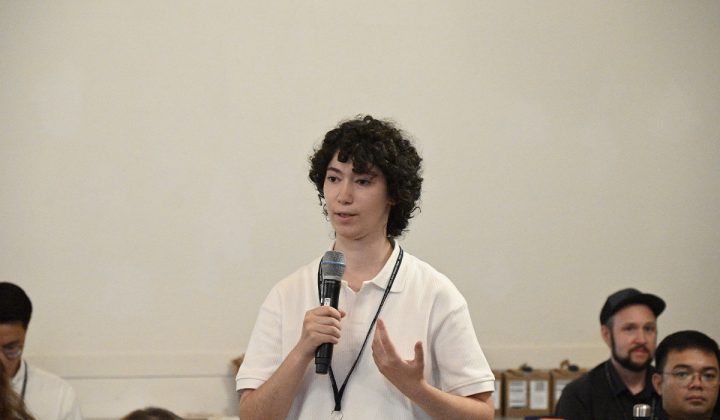
Eden, who studies Aerospace at ESILV, presented the results at SpaceCHI.
Presenting the poster at NASA Ames
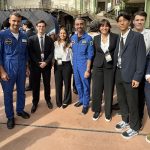
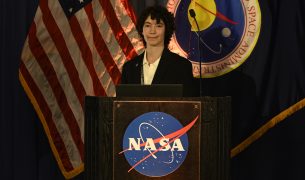
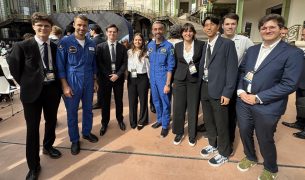
SpaceCHI 2026 took place at NASA Ames Research Center, one of NASA’s field centres, located in California’s Silicon Valley. On 24–25 September, Eden presented the poster and discussed the research with participants from different backgrounds.
Among the people she met was Yarik Möller from the European Space Agency. Eden also thanked SpaceCHI organisers Tommy Nilsson, Jessica Marquez and Jean Vanderdonckt, as well as Marina Vanderdonckt for her involvement and welcome.
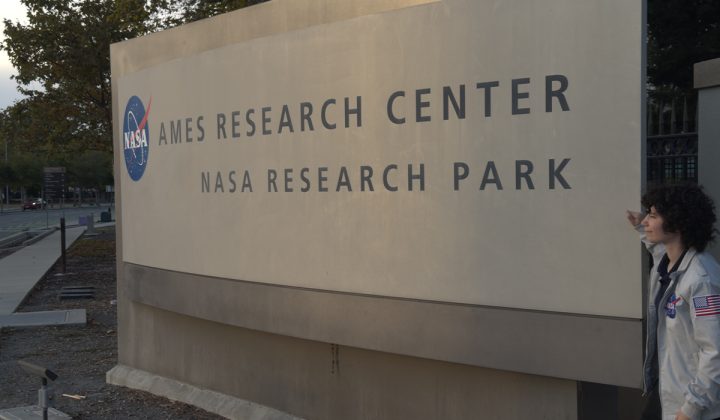
SpaceCHI 2026 took place at NASA Ames Research Center, one of NASA’s field centres, located in California’s Silicon Valley
The exchanges gave Eden feedback on the interface concept and an opportunity to learn about other projects presented at the conference. She said the experience strengthened her desire to pursue research and work in the space sector. She hopes to gain further experience and contribute to new projects as she works towards that goal.