

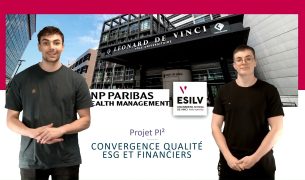


Year 4 Industrial Innovation Project (PI²4) in the ESILV engineering Grande Ecole Programme, 2023-2024. Sustainable investment is at the heart of BNP Paribas Wealth Management’s strategy. As such, the bank regularly researches and creates content to promote a sustainable approach among its clients. ESG analysis of companies is at the heart of this approach. The […]

Year 4 Industrial Innovation Project (PI²4) in the ESILV engineering curriculum, 2023-2024. The probability distribution of an asset’s returns is essential in finance, and more particularly in asset management, whether to quantify the risks or expected gains of owning a security. Of the many probability laws in existence, the most accurate are the non-parametric ones. […]
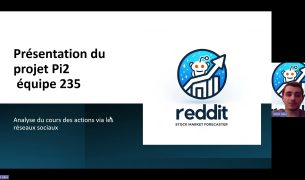
Year 4 Industrial Innovation Project (PI²4) in the ESILV engineering curriculum, 2023-2024 Using social network trends to predict share prices The aim of the project is to detect information on social networks that can be used to optimise the choice of portfolio components. The aim is to detect trends (upward/downward) in a share or group […]
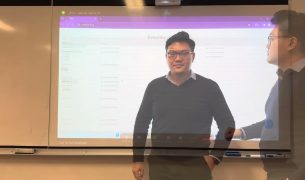
Year 4 Industrial Innovation Project (PI²4) in the ESILV engineering curriculum, 2023-2024 Use of AI algorithms to detect outliers in historical market finance data (prices, volatilities, etc.): The objective of this project is to use several artificial intelligence algorithms (the group is free to choose the algorithms and justify their relevance) to detect outliers in […]

Year 4 Industrial Innovation Project (PI²4) in the ESILV engineering curriculum, 2023-2024. The aim of this project, in partnership with Killian Payen (actuary/CGP), is to create a tool for independent financial advisers and private individuals to draw up a wealth balance sheet (which will involve simulating all the financial products, calculating the value at risk […]

PI²4 2020-2021 : 4-th year project 2020-2021 ► https://bit.ly/2NtRKuL As part of our 4th year PI² at ESILV, we were asked to work on an “ESG-compliant Investments evaluation” yearly project. ESG criteria (Environment, Social, and Governance) have been established as the pillars of responsible and sustainable investment in the financial sector. Purely financial aspects are […]
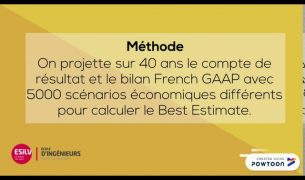
5th-year project 2019-2020 • ESILV • PI²5 ►https://bit.ly/2L323US To begin, let’s define our topic, what is the ICS standard? ICS stands for Insurance Capital Standard. This standard was set up by the IAIS (International Association of Insurance Companies Supervisors) at the request of the Financial Stability Board. The main objective is the preservation of financial […]

5-th year project 2019-2020 • ESILV • PI²5 ►https://bit.ly/2L323US ? We are Team 36, and this year we created I.A.C.A: Intelligent Automated Comparable Analysis. The problem we have observed is that actually there are very few tools that allow us to perform free analyses, or to collect data that will enable us to compare companies […]

5-th year project 2019-2020 • ESILV • PI²5 ►https://bit.ly/2L323US ? Deep Learning is a field of study of artificial intelligence that allows automatic learning based on an extensive database. It has only recently (2010) been democratised in more and more areas, namely market finance. It helps to evaluate the risks that a company would take […]

5-th year project 2019-2020 • ESILV • PI²5 ►https://bit.ly/2L323US ? Our project name is “Alto-scholarship”, it’s an Open Source platform that aims to help financial engineering students to increase their programming skills by providing them with an environment favouring the production of various financial projects. Our platform goal is to give students access to an […]

4th year project, engineering school, class of 2017 Olivier Pigeon – Raphaël Pelat – Yassine Abdelkader Their project The main objective of the project was to quantify the impact of Contingent Convertible Bonds (Coco bonds) on systemic risk. In a baseline scenario where a shock to the market is simulated using the cirrent debt structure […]
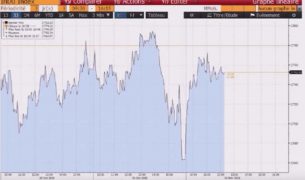
4th year project, engineering school, class of 2017 Corentin Leprael – Damien Bonnel – Luc Rouas – Christian Mosimi Their project Based on different financial index backset, we used the two methods of mean reversion and trend following to predict if the index is more mean reverting or trend following. We collected the closed and […]


Ecole Supérieure d'Ingénieurs
Léonard de Vinci
Paris • Nantes • Montpellier
Tél. : +33 1 81 00 28 38
admissions@esilv.fr
Recrutement