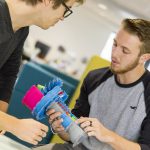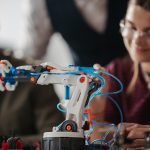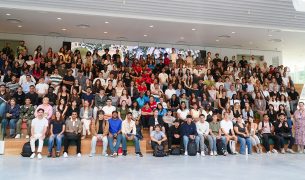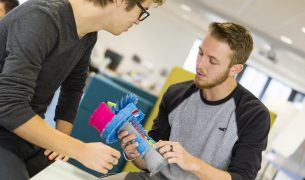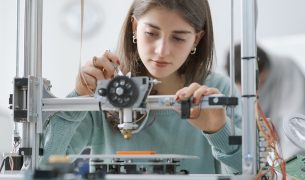

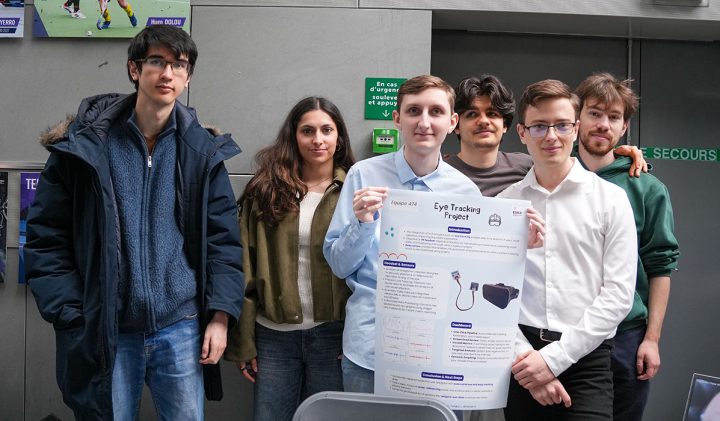
Cybersecurity, artificial intelligence, robotics, electric mobility, and UX design: ESILV’s PI²4 showroom showcased the interdisciplinary projects of the Class of 2027. The event also recognized several teams for their technical achievements, innovative approaches, and dedication.
The PI²4 showroom is a highlight of ESILV’s engineering programme. Organized around the annual projects led by students from the Class of 2027, it showcases the skills developed in the specialization tracks: data & AI, cybersecurity, embedded systems, aeronautics, UX design, and robotics.
The PI²4 Showroom: Interdisciplinary Projects Presented to the Public
The Industrial & Innovation Project (PI²4) is part of the second year of ESILV’s engineering programme.
Conducted during semesters 1 and 2 of the Class of 2027, this project brings together groups of four students to tackle a real-world problem, often proposed by a partner company or a research laboratory.
Equivalent to about 100 hours of work per student, the PI²4 allows students to apply the skills acquired in the engineering program’s majors: project management, development of technical skills, and multidisciplinary teamwork.
This educational approach also encourages experimentation, independence, and collaboration among students with complementary skill sets.
The projects on display draw on several disciplines: software development, electronics, data science, mechanical engineering, signal processing, and artificial intelligence.
Adrien Scazola, a student in Cybersecurity and Cloud Computing at ESILV and a participant in the IFT’s research track, presented several projects developed within the Proteus De Vinci group. The work focused in particular on cyberdefense systems capable of analyzing radio frequencies on various types of vehicles, as well as robotic devices designed to detect aircraft in contested areas.
Other projects were dedicated to signal triangulation, the interception of high-speed drones, and data capture in complex environments.
Artificial Intelligence and Electric Mobility at the Heart of the Projects
Several teams worked on issues related to the energy transition and industrial applications of artificial intelligence.
Rita Fadili, a Data & AI student, presented a project focused on predicting the energy consumption of an electric vehicle. The team designed a “digital twin” of the car to model its energy behavior using physical data and machine learning algorithms.
“We built the physical model and then added a correction layer using machine learning,” explains Rita Fadili.
The project achieved a correlation coefficient of nearly 0.99 between the predictions and the observed data.
This approach illustrates the integration of data science, modeling, and software engineering skills in projects conducted within the engineering programme.
Soft skills and technical skills developed through project-based learning
The PI²4 showroom also highlighted the collaborative aspects of the engineering programme. The teams spent several months working on real-world problems related to their specialisms.
One group, in particular, developed an eye-tracking headset designed to measure pupil movements in order to analyse visual attention whilst viewing content or playing video games.
The students involved emphasise the importance of teamwork in the project’s success:
“The project helped to identify the strengths and skills of each member of the team.”
On a technical level, the teams report an improvement in their skills in Python programming, data processing and the development of embedded solutions, with support provided by professional mentors.
This project-based learning approach is a key feature of ESILV’s engineering curriculum. It encourages the practical application of scientific and technological knowledge in interdisciplinary contexts.
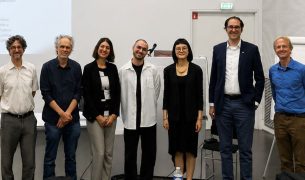
The teams recognised at the PI²4 forum
The forum recognised several teams for the quality of their projects and their approach to implementation.
Engineers for Social Progress Award
Team 498, comprising Othman Bouchentouf, Camille Catteau, Thomas Mercier, Shubham Nagnath Bollu, Maxence O’Kelly and Coralia Shan, received the award for social progress.
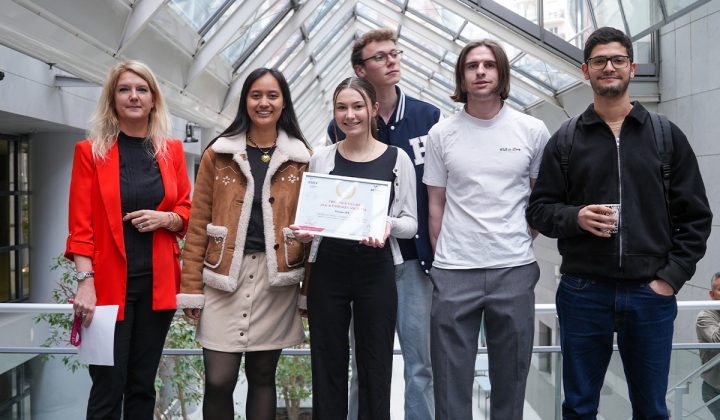
Innovation Award
The Innovation Award – Aerospace category was awarded to Team 16: Céléna Boudaa, Alexandre Cluzet, Henri Oger, Raphaël Perrier and Raphaël Waflard.
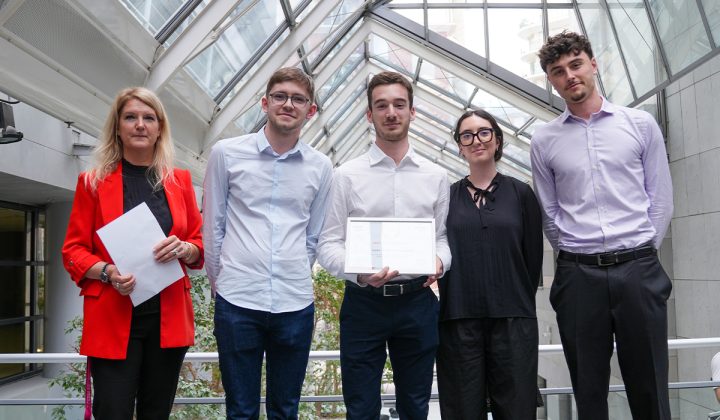
The Innovation Award – UX Design track was presented to Maël Bourgeois, Arthur Carré and Julien Chauvot.
Best Project Award
Team 499, comprising François Saint Jean, Ali Ali Dabale, Aurèle Habbard, Mustapha Kherif, Noa Liegeois and Antonin Marcel, received the Best Project Award.
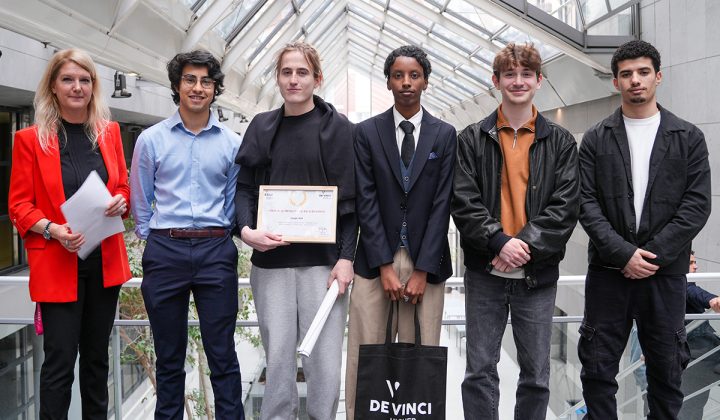
Future Vision Award
The Future Vision Award was presented to Team 452: Louis Alibert, Elisa Durachta, Varian Pasquet, Léna Titous, Ivan Vieira and Clément Vurpillot.
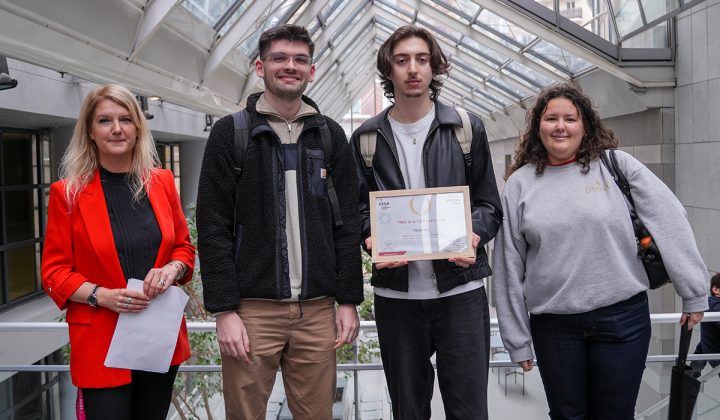
Technical Excellence Award
Team 4309, comprising Mathieu Courselle, Candice Glucina, Hugo Peltier, Elie Clocuh, Lucas Godin, Lilian Jaouen and Dimitri Sadovenko, was awarded the Technical Excellence Award.
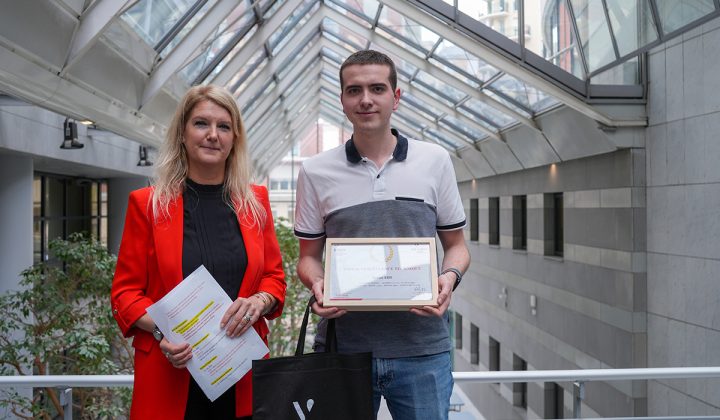
Commitment Award and People’s Choice Award
The Commitment Award was presented to Team 4406: Cléante Aubert, Damien Leclercq, Damien Morganico, Florian Payet and Maxime Rotger.
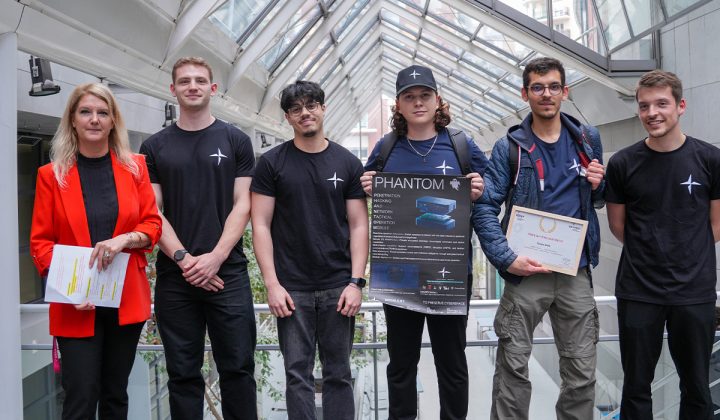
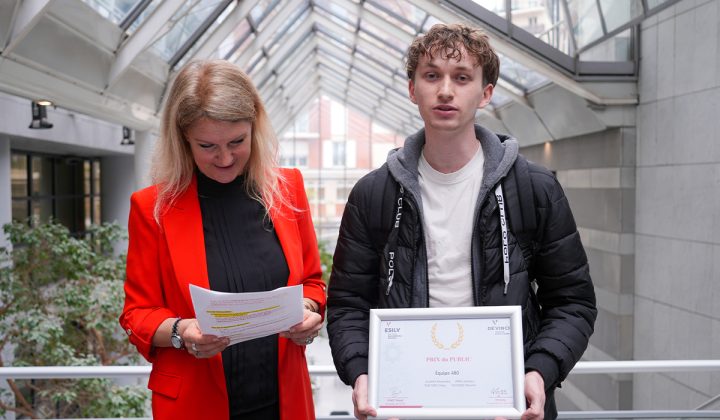
The People’s Choice Award went to Team 480: Alexandre Allaire, Jérémie Pâris, Chloé Poutiers and Maxime Schoose.
An educational approach focused on experimentation and the integration of skills
The PI²4 showroom illustrates the importance of interdisciplinary projects in ESILV’s engineering programme.
The projects on display draw on scientific, digital and collaborative skills applied to issues relating to industry, cybersecurity, mobility and user experience.
This teaching approach enables students to apply their theoretical knowledge to real-world scenarios, taking into account the technological challenges and associated applications.
More about the Master in Engineering specialisations at ESILV